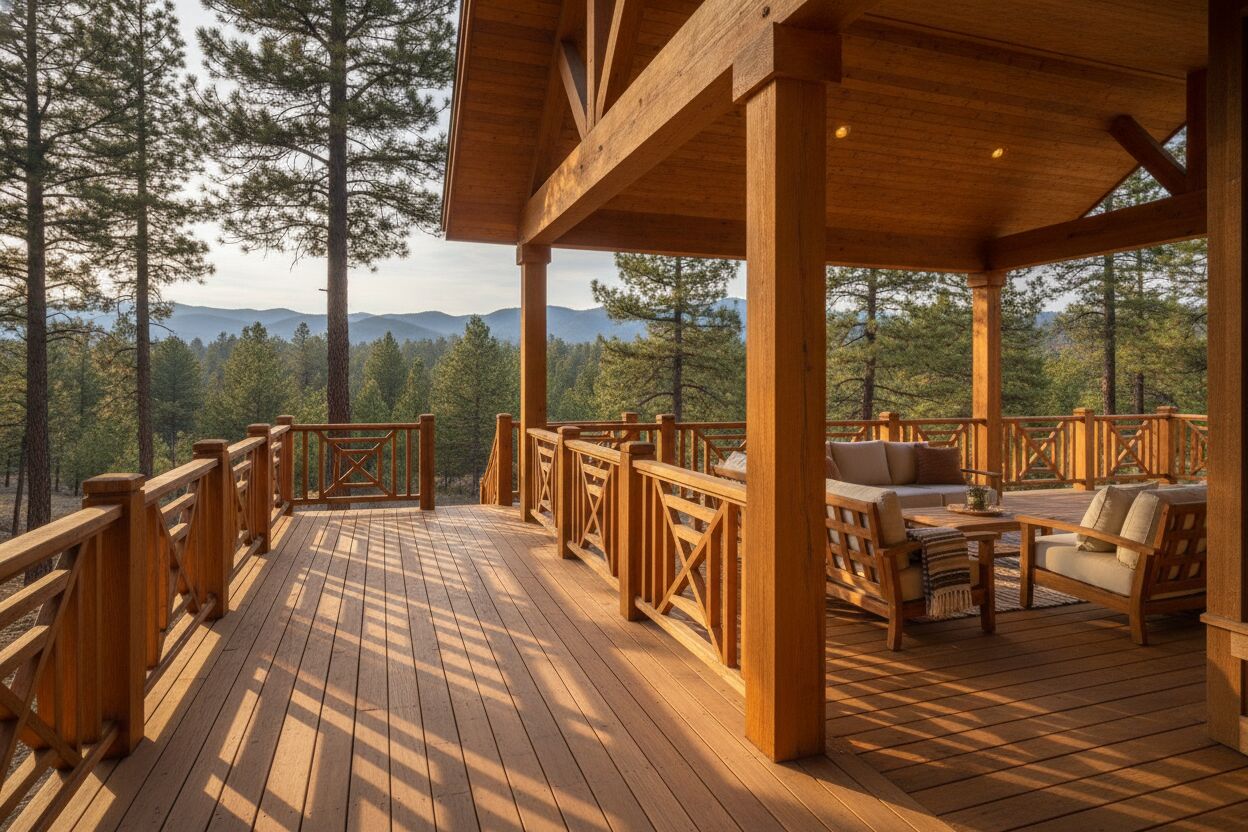
Deck pricing in Flagstaff isn't quite the same conversation as deck pricing in lower-elevation, warmer parts of Arizona. Elevation, snow load, and freeze-thaw cycles all factor into design and material decisions — which in turn affect cost. Here's what actually moves the number.
Material Choice
Pressure-treated lumber, cedar, and composite decking all have different price points and maintenance profiles. Composite costs more upfront but requires less ongoing maintenance; wood costs less initially but needs periodic sealing and upkeep — especially given Flagstaff's seasonal moisture and freeze-thaw cycling.
Footing Depth and Frost Line
At Flagstaff's elevation, frost depth requirements affect how deep footings need to be dug — a structural requirement that lower-elevation desert builds don't face to the same degree. This is a code and engineering consideration, not just a cost line item, but it does affect labor and material for the substructure.
Size and Layout Complexity
A simple rectangular deck costs less per square foot than a multi-level deck with built-in benches, custom railing, or an integrated pergola. Stairs, railing style, and any structural transitions between levels all add complexity.
Covered vs. Open
A covered porch involves additional structural work — roof framing, potentially tied into the home's existing roofline — compared to an open deck. This adds both material and labor beyond a standard open-deck build.
Permitting
Depending on the deck's size, height, and how it attaches to your home, Coconino County permitting may apply. Permit requirements are project-specific, and it's worth confirming what applies to your build as part of the design process.
Getting an Accurate Number
Because material, size, elevation-related structural requirements, and design complexity all vary, the only reliable way to get a real number is a design consultation for your specific project and site. Northern Arizona Carpentry provides a free, no-obligation estimate after understanding your space and goals.